01Mindfocus
Turning a fragmented learning product into one clear mastery loop
Open Open page


Overview
I defined and prototyped AoMars around one promise: the player's focus creates a temporary connection that lets Ao pursue her research and recover fragments of her world's memory. The prototype turns that promise into a testable daily loop.
1
complete Fragment scope
7
validation hypotheses
4
return states modelled
Context
AoMars sits between a focus tool, a narrative adventure and a virtual companion. The player is the only person who can connect with Ao; that connection lets her investigate the Monolith and recover knowledge erased from her world. The current artifact is an interactive prototype, not a shipped app.
Starting point
A timer alone makes sessions feel interchangeable
Ao becomes decorative if the user's focus causes nothing visible
Narrative progression can overwhelm the utility of the focus experience
Return mechanics can become punitive if absence is treated like a broken streak
Mechanic
The daily cycle opens a temporary connection with Ao and allows her research to advance. Completing it restores part of the active Fragment, protects that recovered progress, creates an entry in Ao's journal and may reveal Mementos or another clue about the Monolith and its crystals.
Decisions
The disconnected and connected states make the product promise visible. Ao's world is only shown live during an active session, so starting focus changes both the interface and what Ao is able to do.
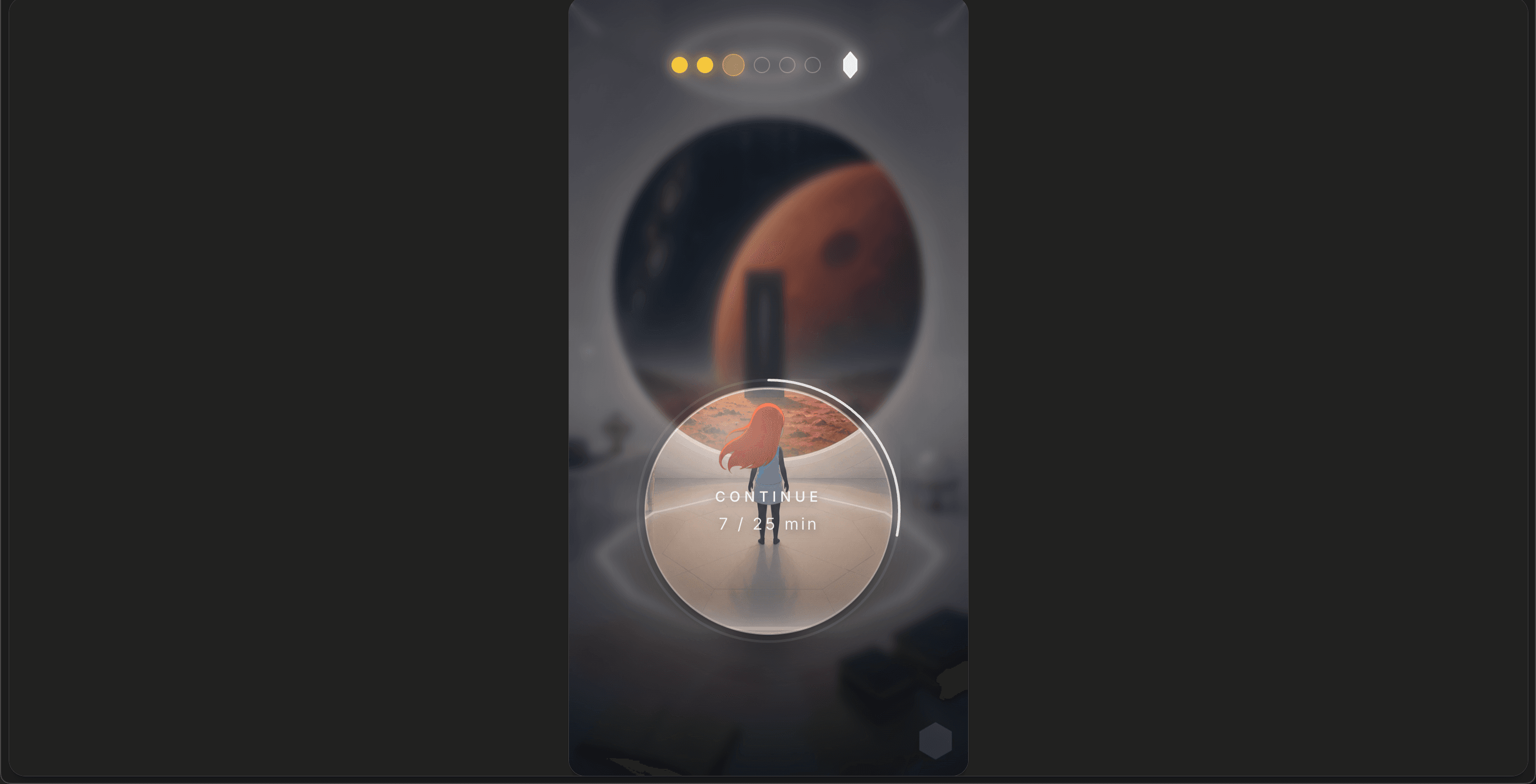
Disconnected home — focus creates the connection
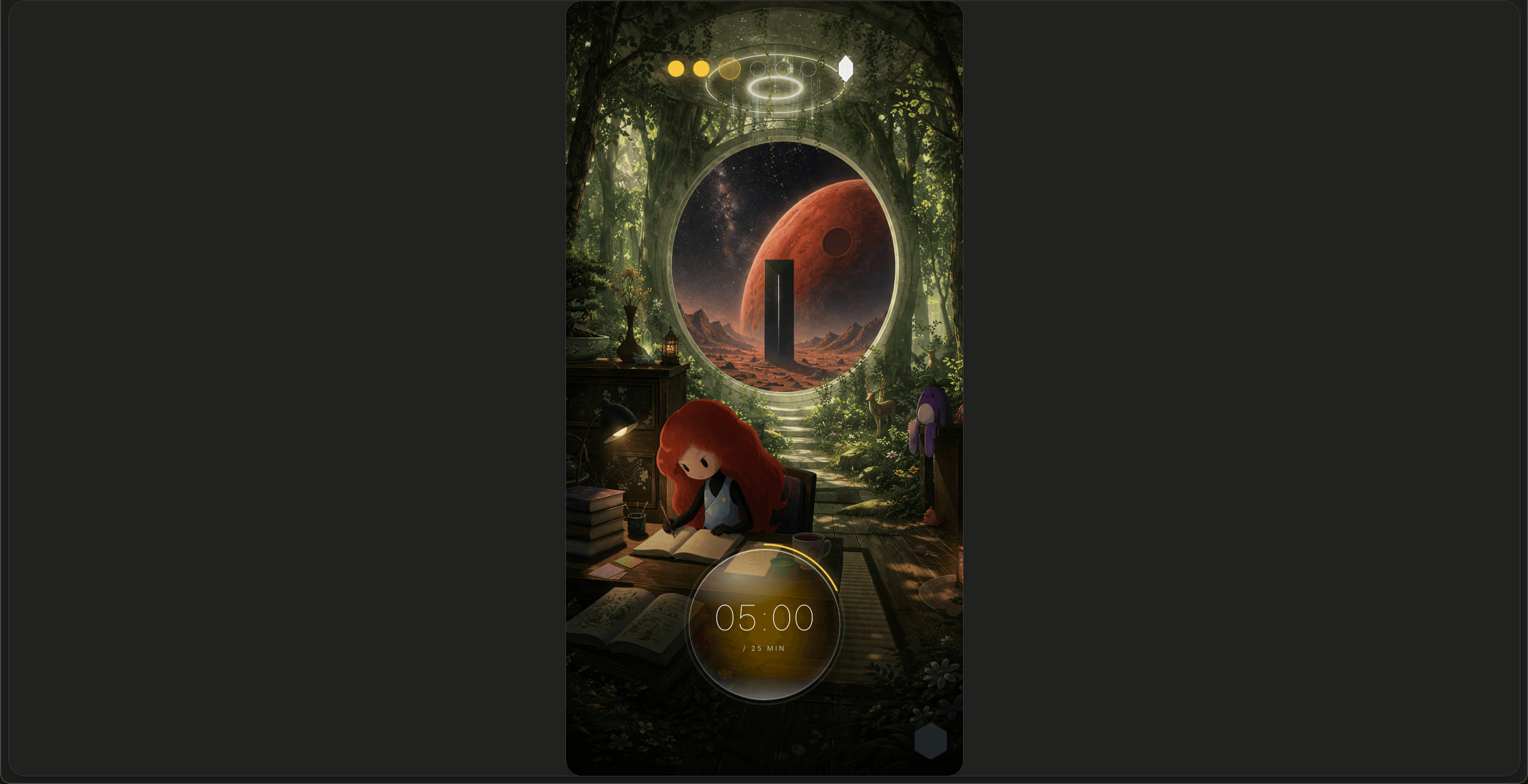
Focus session — the connection advances Ao's research
Completion is not reduced to time or points. The active Fragment progresses, Ao records what she discovered and the product reveals the specific knowledge or event made possible by the player's session.
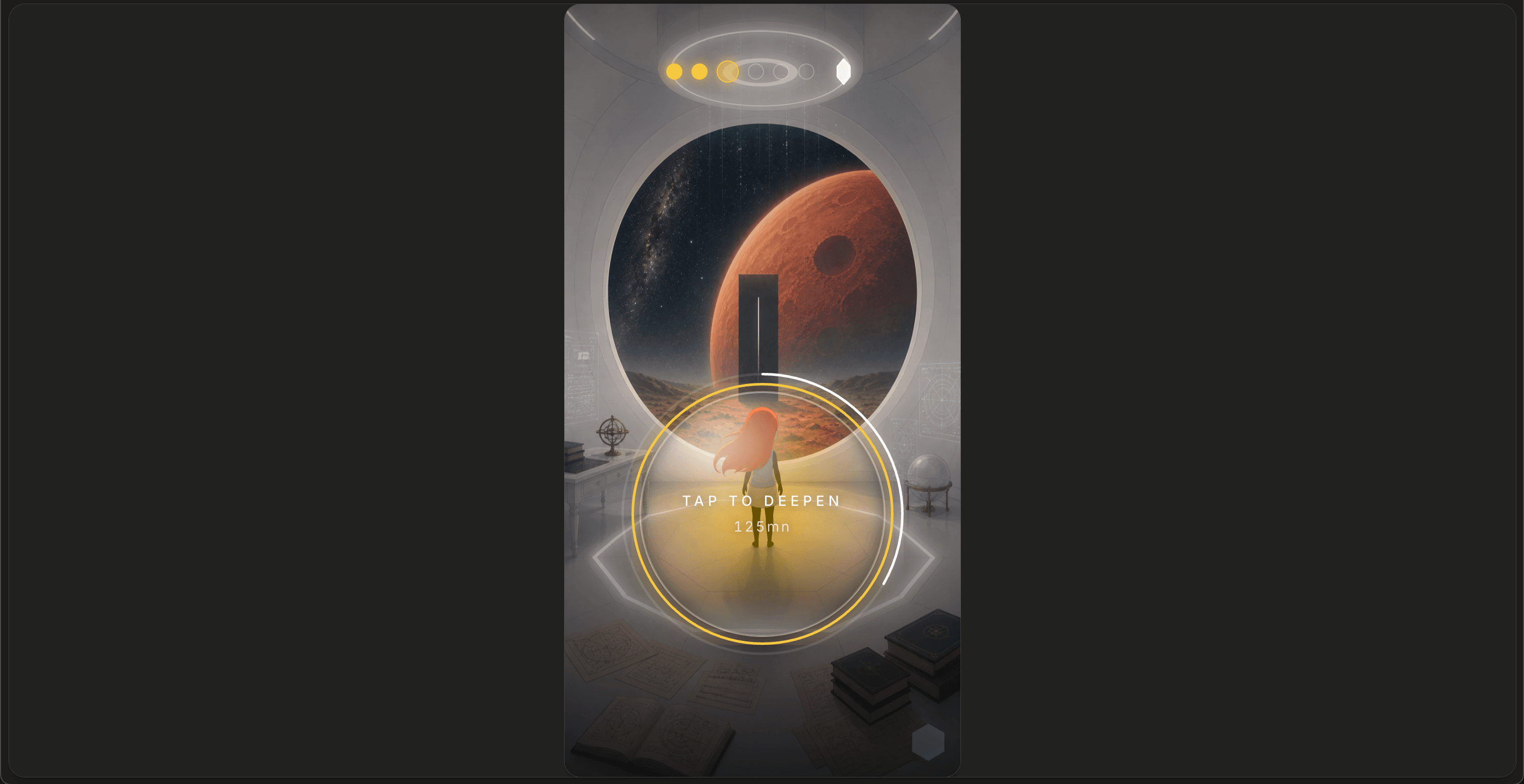
Completed cycle — progression becomes visible
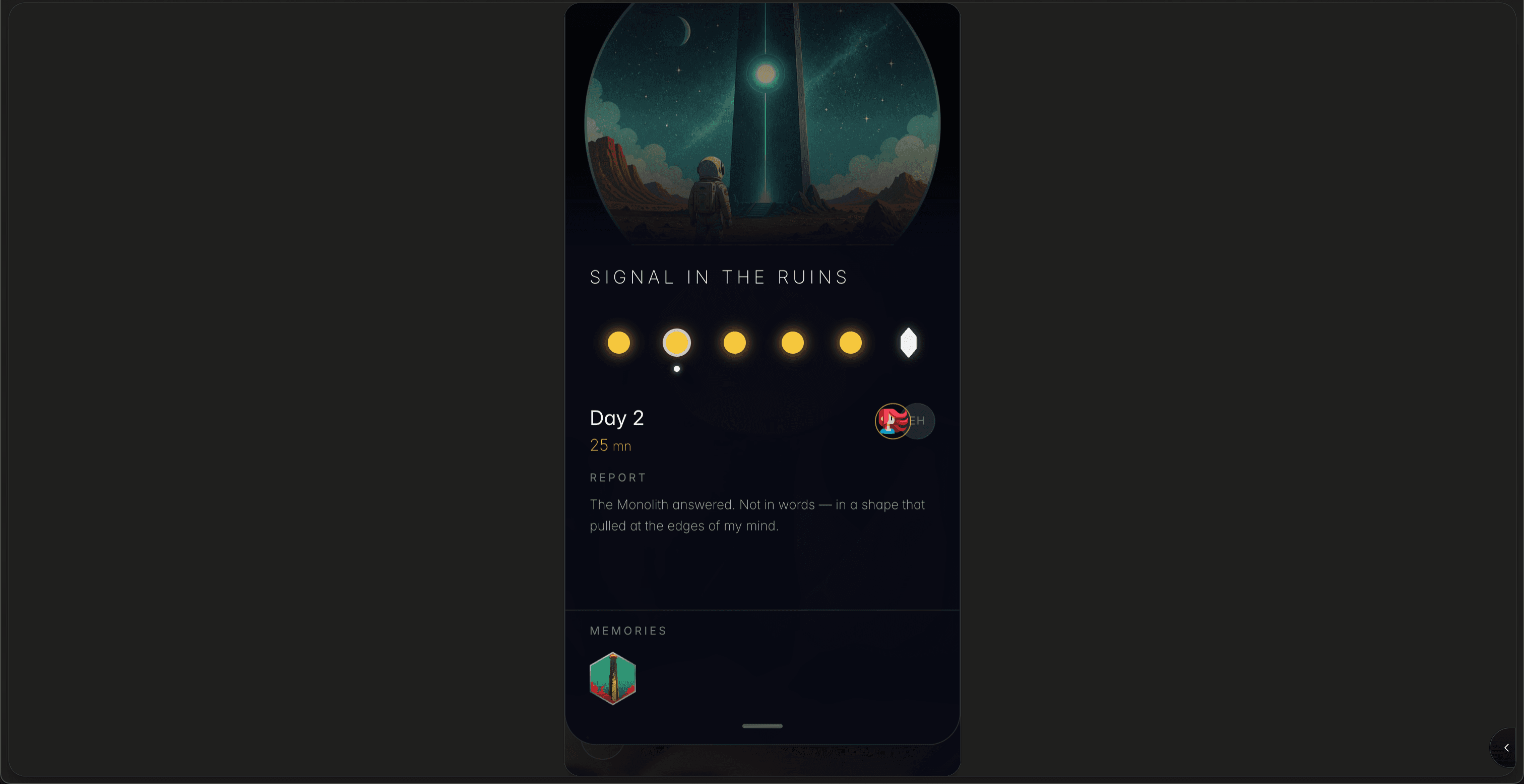
Ao's journal — narrative evidence of completion
Unprotected memories move through Trouble and Degradation when the player stays away. The interface makes that consequence visible and gives returning a restorative purpose, while sealed Mementos and the player's journal remain protected.

Memory trouble — recovered progress begins to destabilise
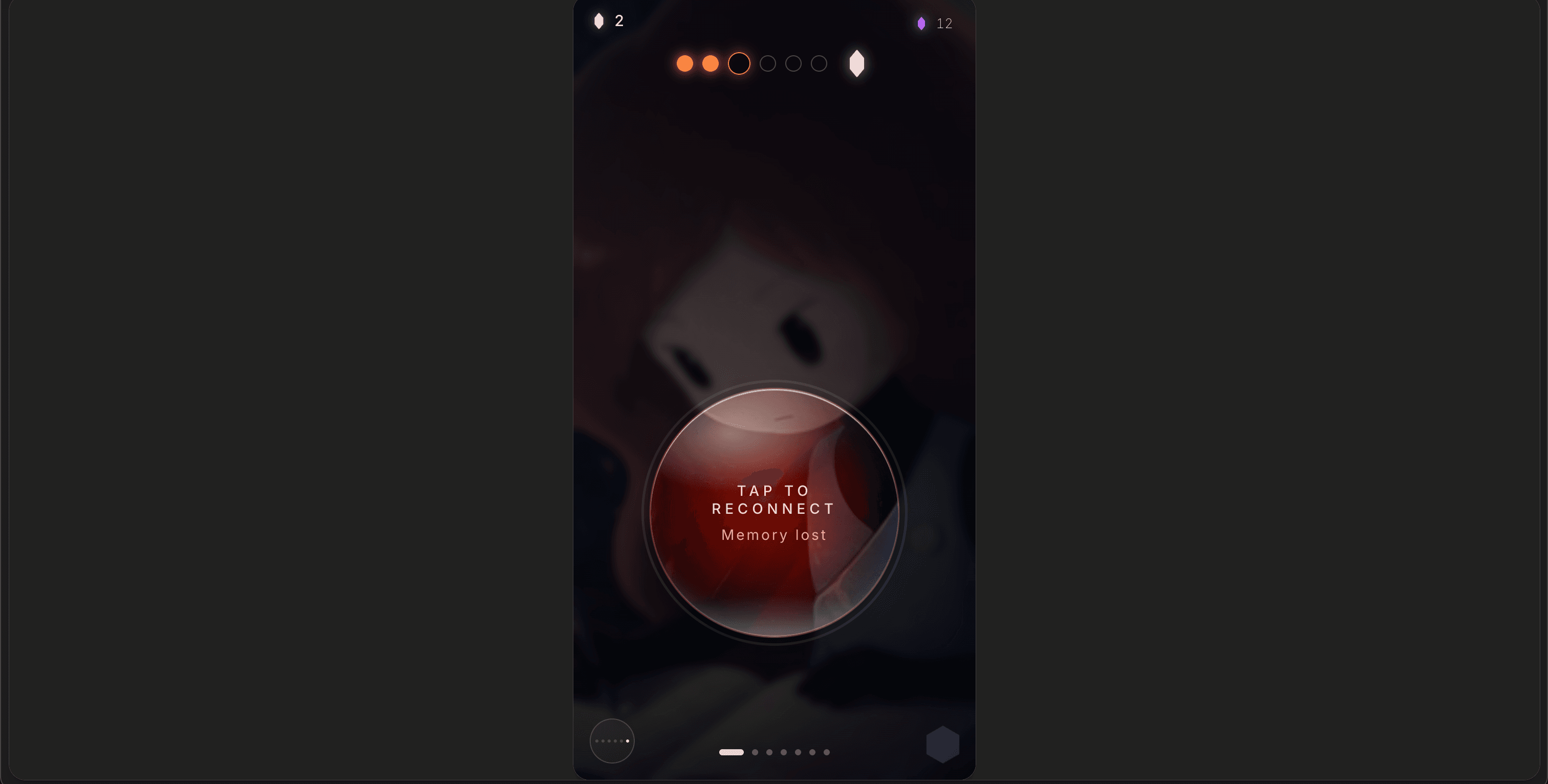
Memory degradation — a reversible return state
At the end of an Adventure, the player can choose and order the Mementos to seal into its crystal. Those memories become permanent and their arrangement can influence what later Adventures reveal — a high-value interaction to validate before production.
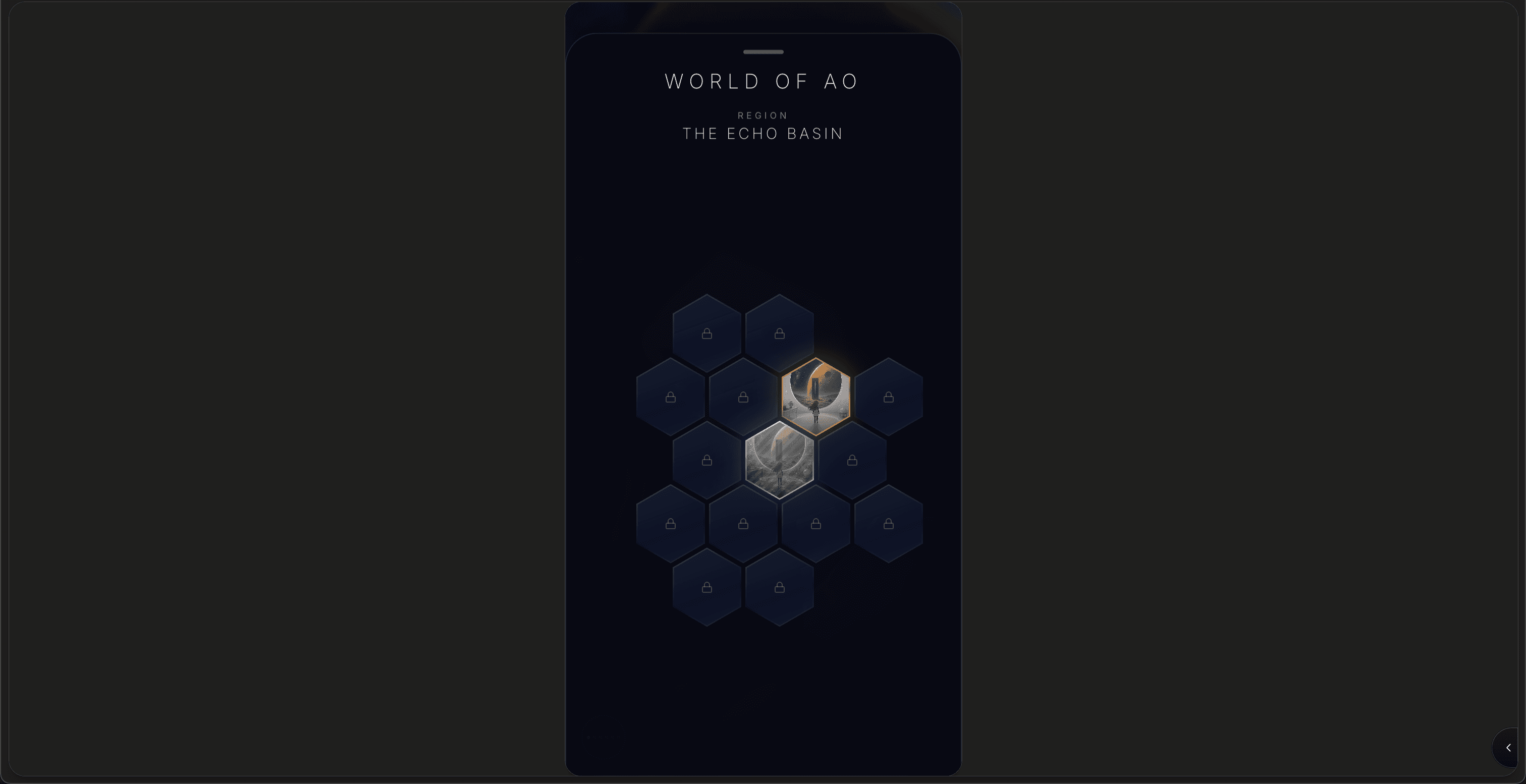
World progression — recovered memories reveal Ao's world
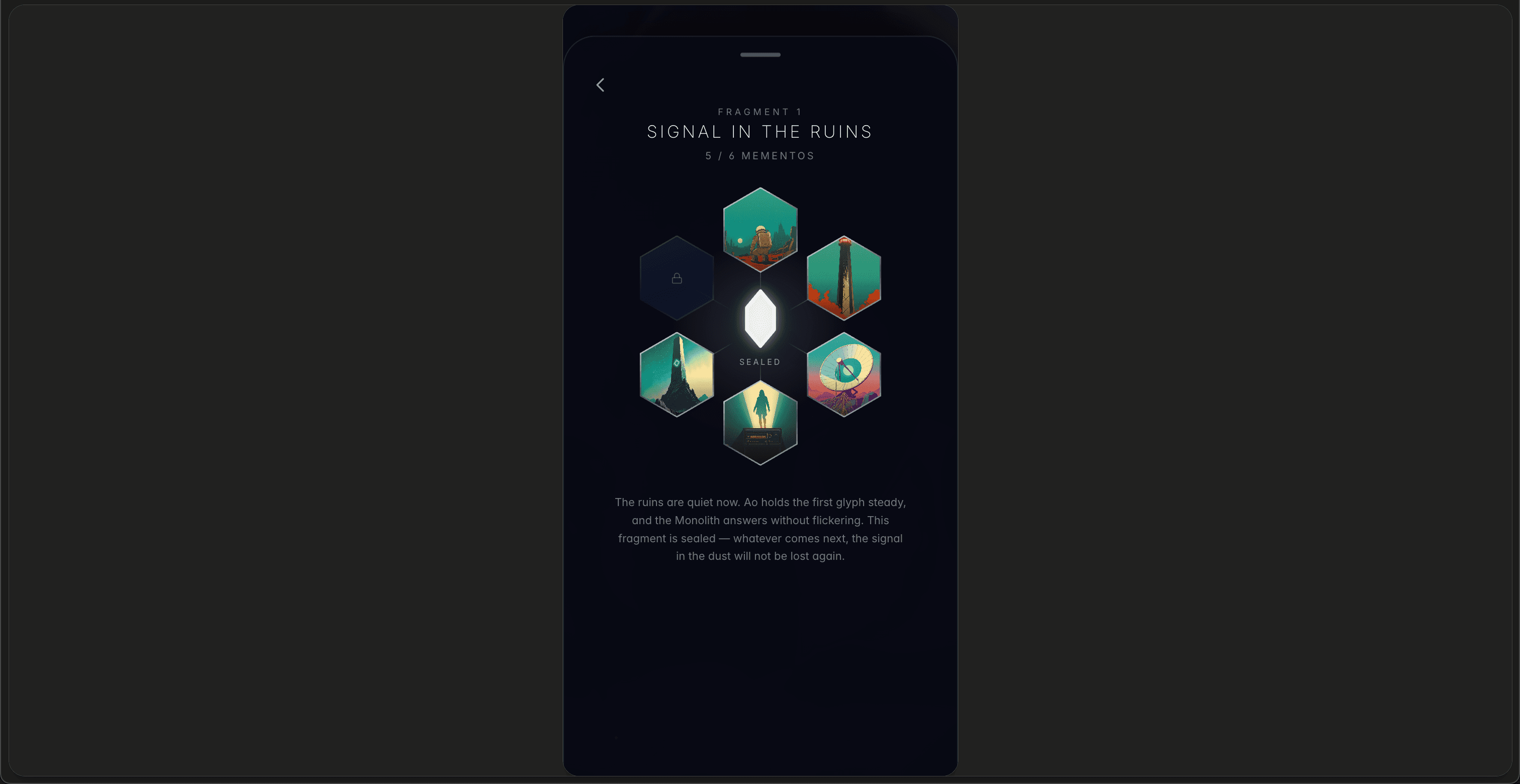
Fragment decision — choose which Mementos become permanent
System
I translated the concept into observable behaviors, state transitions and explicit hypotheses. This keeps the test focused on whether the connection with Ao changes concentration and return — rather than asking users whether they like the lore.
Focus temporarily connects the two worlds and lets Ao investigate. A completed cycle must advance her research, protect progress and produce an identifiable consequence; partial time never creates partial progression.
Cycles restore journals, clues and Mementos. At the end of an Adventure, the player can curate their order and choose which recovered memories are sealed permanently in the crystal and may shape later Adventures.
Connection, Protection, Trouble, Degradation and Restoration are distinct states with different rules. Earned stable content and the player's personal journal remain protected.
Payment may restore or protect work already earned, or unlock secondary stories and personalization. It can never buy unfinished focus, undiscovered Mementos or core progression. A later physical Store could extend the universe through figures, art prints, clothing and objects.
The MVP is reduced to one complete Fragment so comprehension, session behavior, attachment to Ao, voluntary return, the Memento ritual and perceived fairness can be observed over several days.
Prototype and business scope
The current deliverable is an interactive mobile prototype supported by a product blueprint. Platform, timer architecture, persistence, notifications, the external Memento pipeline, pricing and the exact free/paid model remain deliberately open until the central loop and willingness to pay are tested.
Interactive Prototype · Product Blueprint · State Model · Content Model · Validation Plan · Business Guardrails
Validation
The same participants experience one complete Fragment over several days. The test combines observation, comprehension checks, behavioral events and short interviews instead of treating a positive reaction to the story as product validation.
Observe whether the connection with Ao changes session start and completion
Ask users to explain what their focus allowed Ao to discover or restore
Measure voluntary return across a complete Fragment rather than a one-session demo
Test whether Trouble, Degradation and Restoration feel fair instead of punitive
Evaluate whether choosing and ordering Mementos feels meaningful and understandable
Test monetization concepts separately so willingness to pay cannot distort the core-loop test
Measure the production cost of journals, discoveries, Mementos and their validation