
01Mindfocus
Turning a fragmented learning product into one clear mastery loop
Open Open page

Overview
I took PitchArena from a time-boxed design assignment to a working SaaS MVP, defining the product loop, designing the experience and building the full-stack AI system with a governed agent workflow.
12
playable challenges
59
product-rule tests
40
Judge evaluation cases
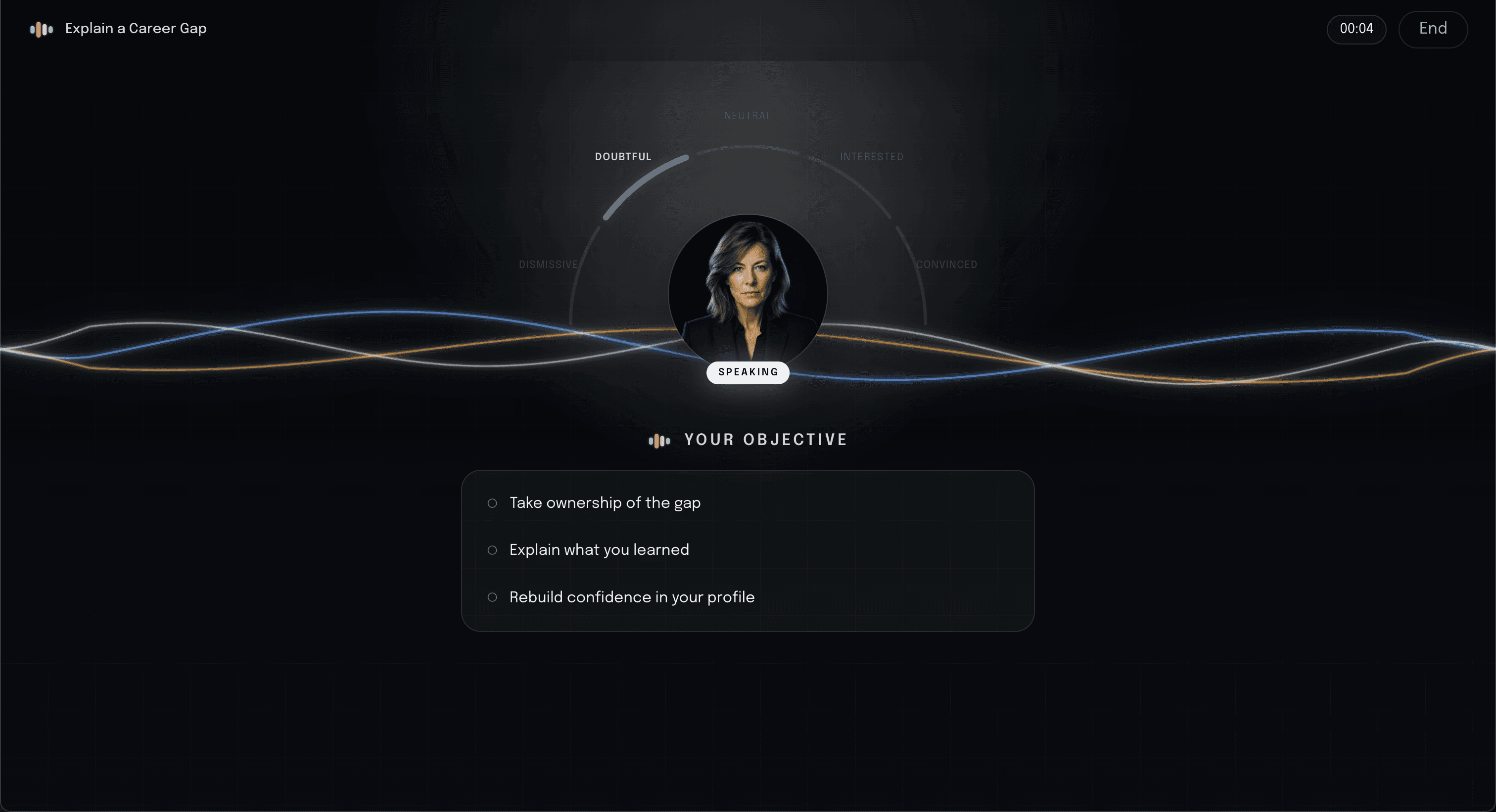
Context
The assignment asked for a domain-neutral voice conversation interface with production-ready polish. Simulated AI was allowed and no real backend was required. The first prototype proved the interaction, but it did not yet define what users should achieve, how success could be trusted or why they should return.
Starting point
The brief ended at the quality of the conversation interface
A realistic exchange had no observable success condition
Feedback and progression were neither persistent nor authoritative
Completing one session created no strong reason to replay
Mechanic
Every round places the user in a situation with a resistant persona and observable objectives. The system records the conversation, validates exact evidence, explains what changed and turns the result into a reason to retry or progress.
Decisions
The product moved from selecting a scenario to entering a structured challenge. Users now understand the situation, the persona's resistance and the objectives they must demonstrate before they start speaking.
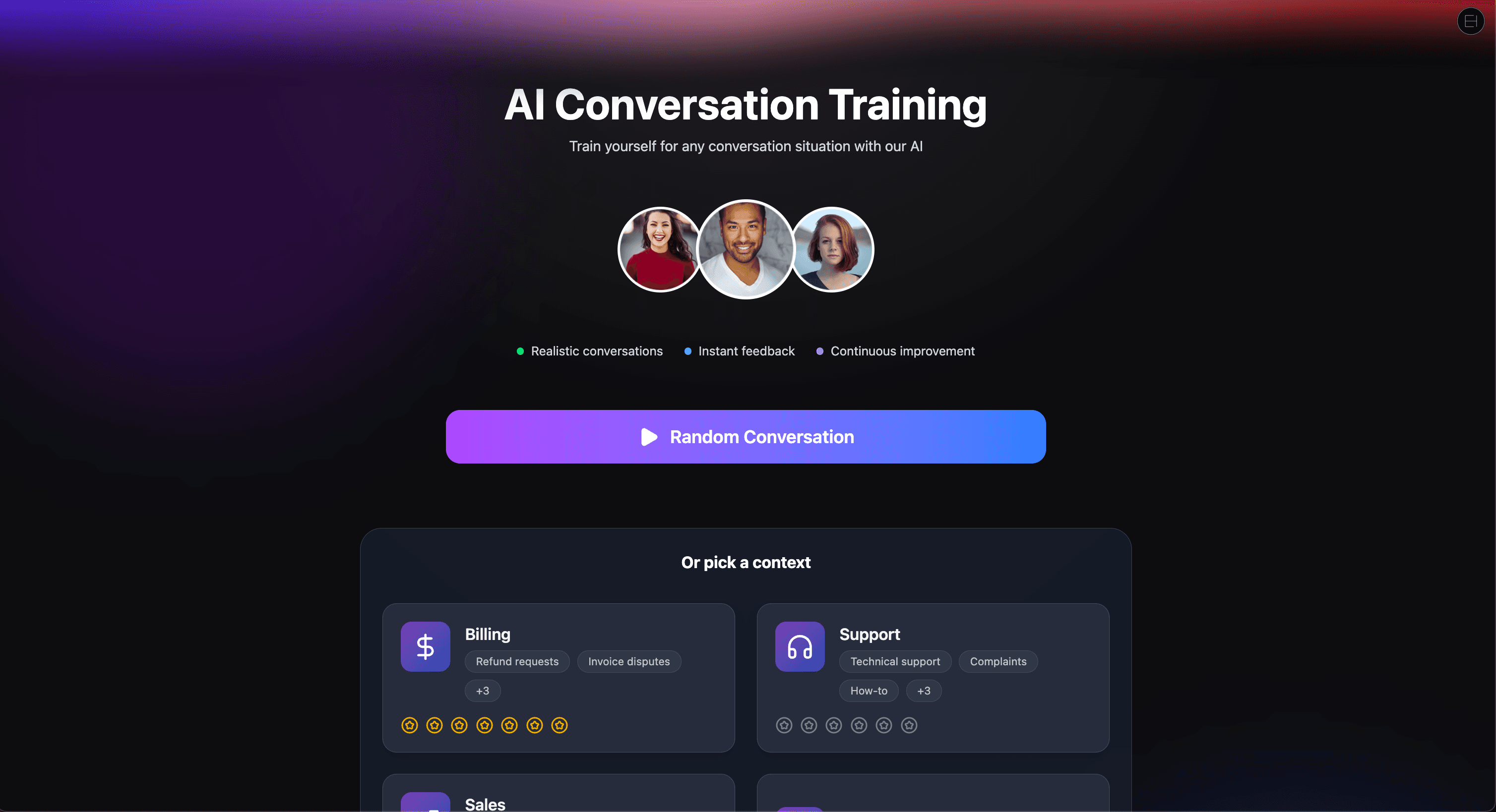
Scenario Selection — Before
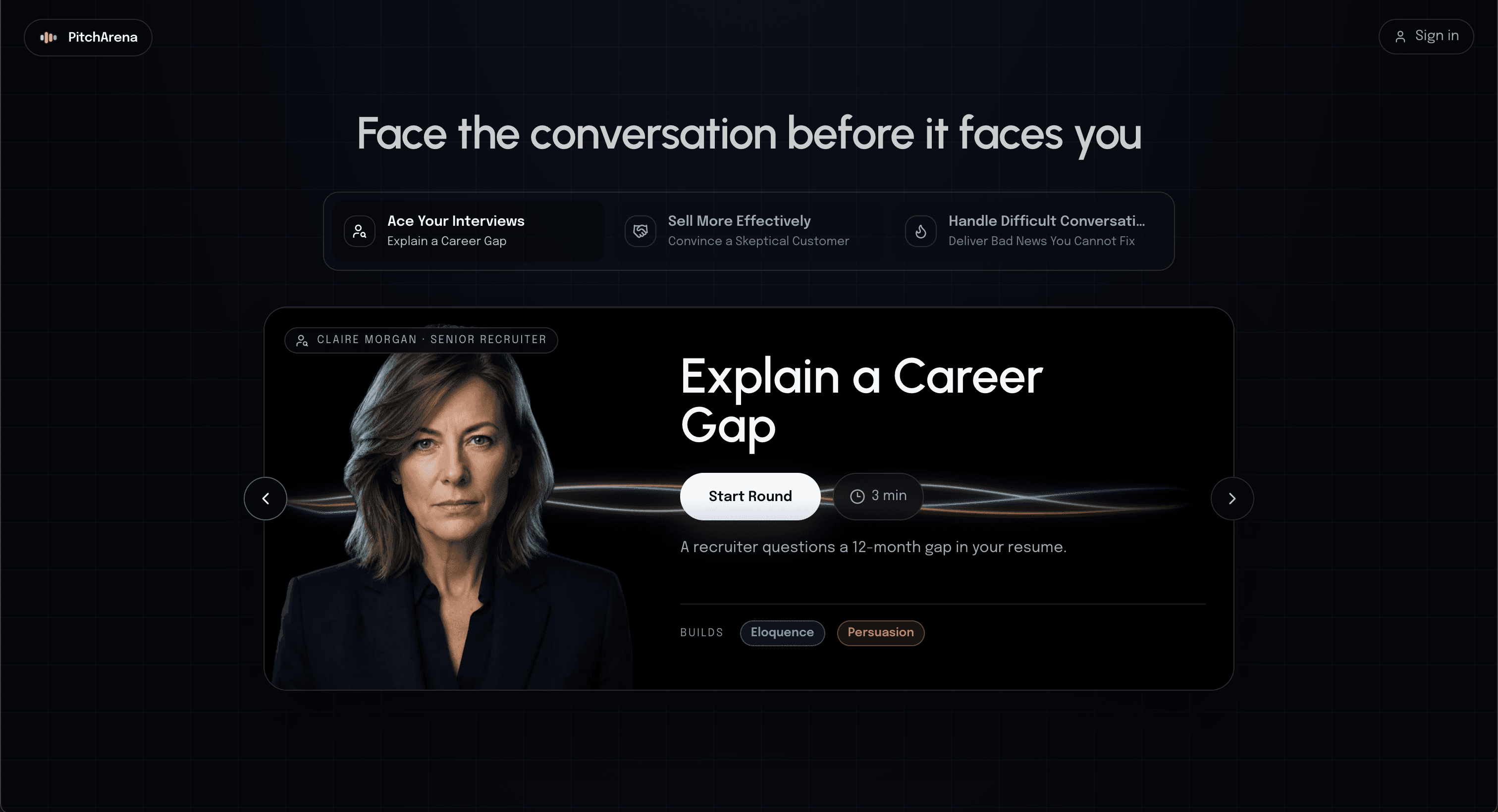
Challenge Selection — After
The live experience now protects the conversation while a separate Judge evaluates user turns against explicit rubrics. This keeps the persona believable and makes progress dependent on what the user actually said.
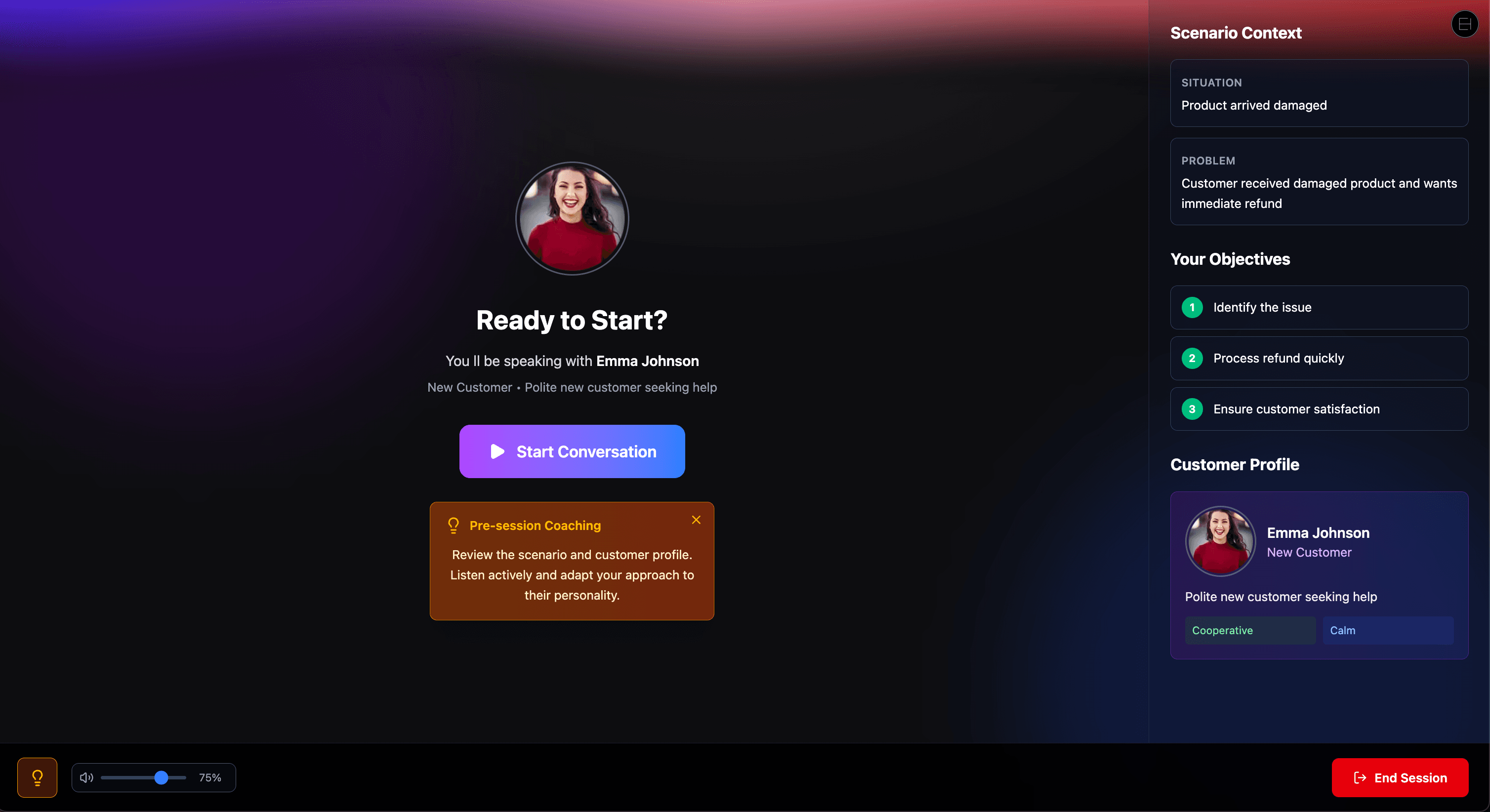
Context-Heavy Session — Before
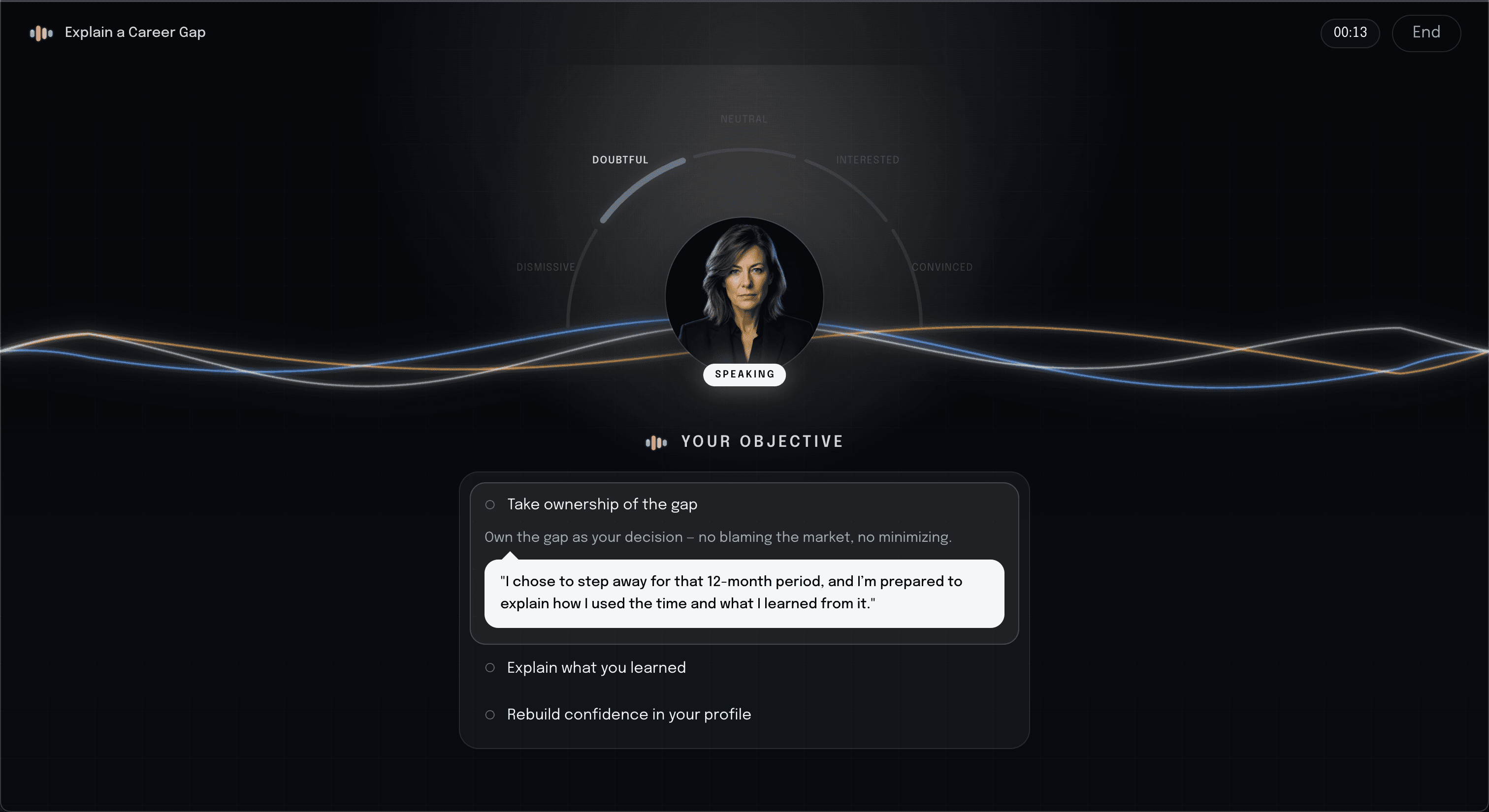
Focused Training Round — After
Results moved from a terminal report to a progression loop. Transcript-backed evidence, missed opportunities, Personal Bests and the next challenge give users a concrete reason to replay and improve.
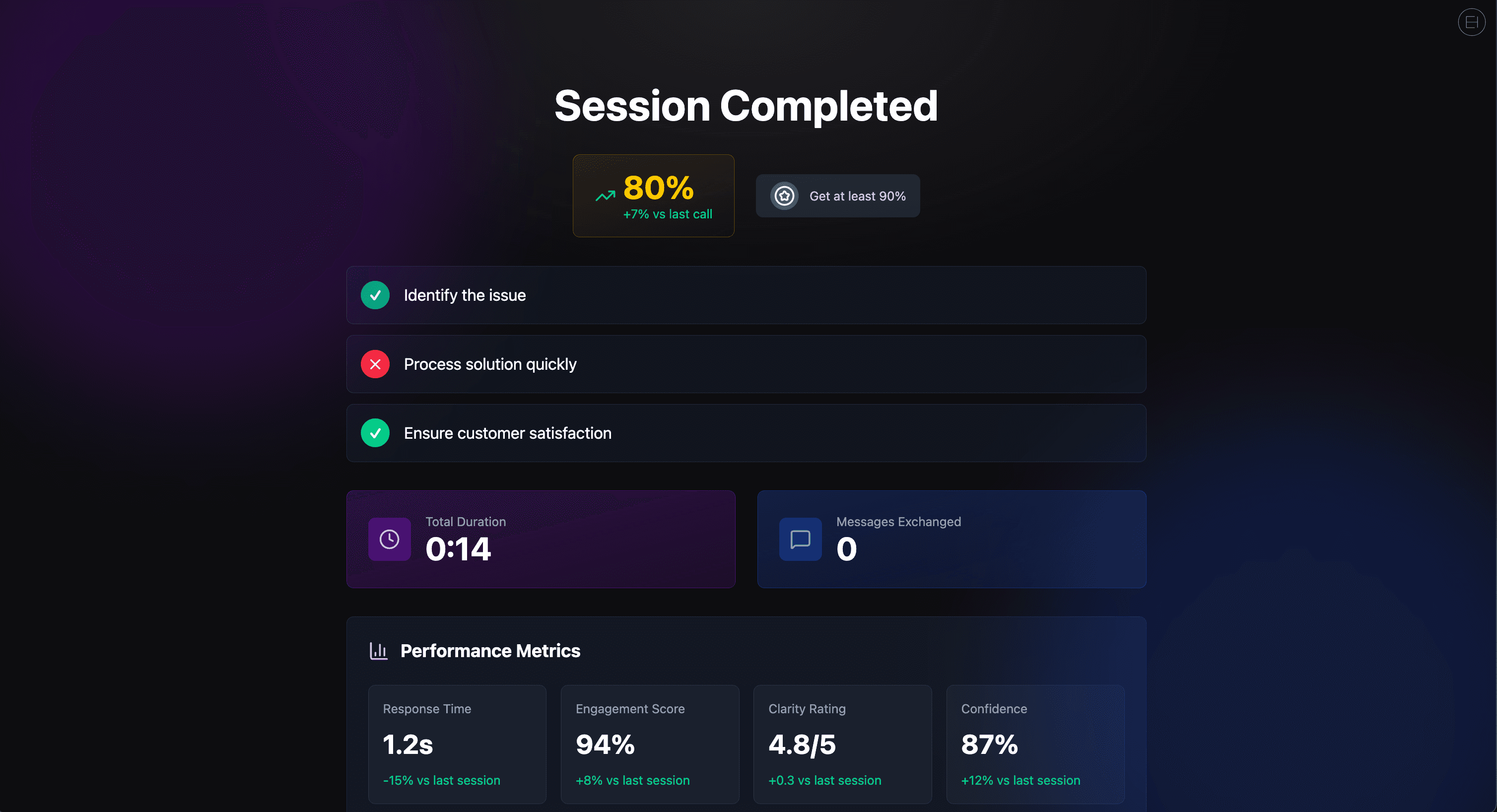
Performance Report — Before
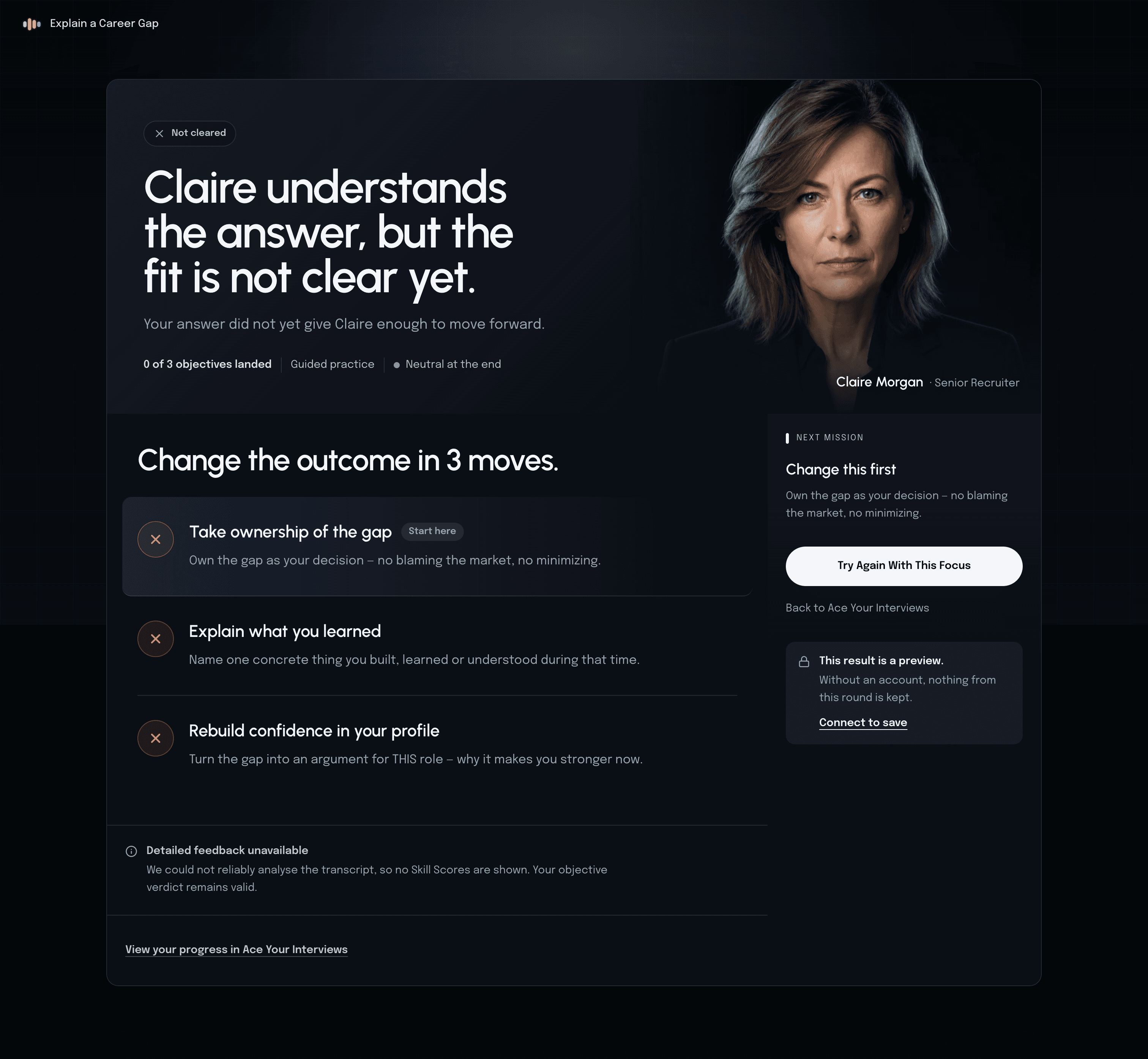
Progression Loop — After
System
I designed the product and implemented the interface, server routes, data model and AI behavior. Agents accelerated exploration, implementation and review, while product rules, acceptance criteria and release decisions remained under direct human control.
The Realtime Actor only performs the persona. A server-side Judge validates objectives against exact transcript evidence. A deterministic Director applies trust, pressure and end-of-round rules.
PostgreSQL persists users, rounds, conversation turns and Judge decisions. The browser cannot invent scores or progression, and an unavailable evaluation produces no replacement result.
Work was divided into bounded product, build and review tasks. Code, data, authentication and critical product rules were checked before integration, with human approval at decisions that changed the product promise.
Fifty-nine deterministic tests cover product and entitlement rules. A forty-case golden set tests the real Judge across all twelve challenges, including clear success, failure and adversarial behavior.
Production foundation
TanStack Start and React power the interface and server routes. Prisma and PostgreSQL/Neon persist the product state, Clerk handles identity, Stripe supports Free and Pro access, and PostHog measures the complete round journey.
TanStack Start · React · TypeScript · Prisma · PostgreSQL / Neon · OpenAI Realtime · Clerk · Stripe · PostHog
Evidence
PitchArena now has a complete product and technical loop that can be exercised, inspected and improved. This is delivery evidence, not a claim of product-market validation.
Three Paths and twelve playable challenges with distinct personas
Real-time voice, transcript-backed objectives, feedback, replay and mastery progression
Persistent server-authoritative rounds, authentication, entitlements and analytics
Fifty-nine deterministic product-rule tests and a forty-case Judge evaluation set
Repeat usage, willingness to pay and market demand remain to be validated with real users